Picture this: it’s a lazy Saturday morning, the sun is flirting through the blinds, and you’re standing in front of an open fridge that looks like a barren desert of leftovers. I was there, clutching a half‑eaten bag of stale granola, when a sudden craving for something bright, fresh, and ridiculously photogenic hit me like a splash of tropical rain. I tossed a couple of random fruits into the blender, added a splash of coconut milk, and what came out was a murky mess that tasted like a watered‑down smoothie from a gym vending machine. I laughed, I cried, and I swore I’d never attempt a fruit bowl again—until I discovered dragon fruit.
Dragon fruit, with its neon‑pink exterior and speckled white flesh, is the culinary equivalent of a sunrise after a storm. The moment you slice it open, you’re greeted by a subtle, almost cucumber‑like aroma that hints at sweet berries and a whisper of citrus. Its texture is a delicate balance between the crisp snap of a watermelon and the buttery melt of a ripe mango, making it the perfect canvas for a smoothie bowl that feels both indulgent and light. I decided to treat this exotic gem with the respect it deserves, pairing it with just the right supporting cast to amplify its natural charm.
Most recipes I’ve tried either drown the dragon fruit in too much dairy, turning the bowl into a bland oat‑milk mush, or they overload it with sugary toppings that mask the fruit’s subtle flavor. I was determined to avoid both pitfalls. After a few trial runs, I landed on a version that is hands down the best you’ll ever make at home—no artificial sweeteners, no over‑processed granola, just pure, vibrant goodness that sings on the palate. I’ll be honest — I ate half the batch before anyone else got to try it, and that’s a confession I’m proud to make because the flavor was that unforgettable.
Now, I’m about to reveal a secret technique that most “quick‑mix” recipes skip: a brief flash‑freeze of the dragon fruit chunks before they meet the blender. This step locks in the fruit’s natural juices and prevents the bowl from turning watery, giving you that coveted thick‑as‑silk texture that holds up under a mountain of toppings. I dare you to taste this and not go back for seconds. Let me walk you through every single step — by the end, you’ll wonder how you ever made it any other way.
What Makes This Version Stand Out
- Taste: The natural sweetness of dragon fruit is amplified by a hint of honey and lime zest, creating a flavor profile that feels both exotic and comforting.
- Texture: A creamy, frozen‑smooth base that’s thick enough to support crunchy granola without sinking.
- Simplicity: Only ten core ingredients, all of which you probably have on hand or can grab at a local market.
- Uniqueness: Flash‑freezing the fruit preserves its vivid color and prevents dilution, a step most recipes completely overlook.
- Crowd Reaction: Guests invariably comment on the bowl’s Instagram‑worthy look and the “wow” factor of the pink‑white swirl.
- Ingredient Quality: We use fresh, organic dragon fruit and a splash of coconut milk for a dairy‑free richness.
- Method: No fancy equipment—just a good blender and a freezer‑ready tray.
- Make‑Ahead Potential: The base can be pre‑blended and stored for up to 24 hours, making morning prep a breeze.
Alright, let's break down exactly what goes into this masterpiece...
Inside the Ingredient List
The Flavor Base
Frozen dragon fruit chunks (2 cups): This is the star of the show. Its mildly sweet, slightly earthy flavor forms the backbone of the bowl. If you skip it, you lose the signature pink‑white swirl that makes this dish instantly recognizable. Look for fruit that’s bright pink on the outside and speckled inside; the brighter the hue, the sweeter the taste. If fresh dragon fruit is your only option, cube it and freeze it for at least an hour before use.
Frozen banana (1, sliced): The banana adds natural sweetness and a creamy mouthfeel that mimics the richness of dairy. It also contributes potassium, making the bowl a post‑workout power‑up. Skipping the banana will make the texture thinner and the flavor less rounded. A ripe banana works best; over‑ripe will turn the bowl overly sweet.
The Texture Crew
Coconut milk (1 cup): This provides a silky, tropical backdrop that lets the dragon fruit shine without overwhelming it. Opt for the full‑fat version for the richest mouthfeel; light coconut milk can make the bowl watery. If you’re allergic to coconut, substitute with oat milk for a similarly smooth texture.
Almond milk (½ cup): A splash of almond milk lightens the base and adds a subtle nutty note. It also helps the blender achieve the perfect consistency without adding extra calories. Unsweetened is key; sweetened varieties will make the bowl cloyingly sweet.
Honey (2 tbsp): A drizzle of honey balances the mild acidity of the dragon fruit and adds depth. Use raw, local honey for a hint of floral complexity. If you’re vegan, swap with agave syrup or maple syrup in equal measure.
The Unexpected Star
Chia seeds (1 tbsp): These tiny powerhouses soak up liquid, giving the bowl a slight gel‑like body that keeps it from sliding off the spoon. They also add omega‑3 fatty acids, fiber, and a pleasant crunch. If you forget them, the bowl will be smoother but less satiating.
Lime zest (1 tsp): A whisper of citrus brightens the entire flavor profile, cutting through the sweetness and adding a fresh aroma. Zest only the outermost layer; the white pith is bitter.
The Final Flourish
Granola (½ cup): A crunchy topping that adds texture contrast; choose a low‑sugar, nut‑based granola for extra protein. Skipping granola will make the bowl feel like a single‑texture dessert.
Fresh mango cubes (¼ cup) and kiwi slices (¼ cup): These add bursts of juiciness and a pop of complementary color. They also bring additional vitamins A and C, boosting the bowl’s nutritional profile.
Shredded coconut (2 tbsp): Toasted lightly, it contributes a toasty aroma that pairs beautifully with the coconut milk. If you skip toasting, you’ll miss the caramelized notes that elevate the bowl.
Pinch of sea salt: A tiny amount of salt amplifies the sweetness and balances the flavors. Too much will overwhelm; just a whisper is enough.
Everything's prepped? Good. Let's get into the real action...
The Method — Step by Step
First, gather your frozen dragon fruit chunks and banana slices on a clean countertop. Feel the chill of the fruit against your fingertips—that’s the first sign you’re on the right track. Toss them onto a parchment‑lined tray, making sure they’re spread out in a single layer. This prevents them from sticking together and ensures even flash‑freezing. Power transition: Okay, ready for the game‑changer?
Slide the tray into the freezer for exactly 30 minutes. You’ll hear the faint hum of the freezer, but that’s just background noise to the excitement building inside. After half an hour, the fruit should be firm but not rock‑hard; this is the sweet spot where the cells lock in flavor. Pull them out, give them a quick shake, and set them aside.
Kitchen Hack: If you’re short on freezer space, freeze the fruit in a zip‑top bag—just lay it flat to keep the pieces separate.Now, add the frozen dragon fruit, banana, coconut milk, almond milk, honey, and lime zest into the blender. As the blades whir, you’ll hear a soft, almost musical whirring that signals the transformation is beginning. Blend on high for 45 seconds to a minute, stopping to scrape down the sides. The mixture should be thick, glossy, and a perfect shade of pastel pink.
Watch Out: Over‑blending can turn the mixture watery; stop as soon as it reaches a smooth, thick consistency.Transfer the creamy base into four wide, shallow bowls. The bowl should be filled just to the rim, leaving room for toppings. At this point, the aroma of coconut and fresh fruit should fill your kitchen like a tropical breeze. Take a moment to appreciate the color—this is the visual hook that will have your friends reaching for their phones.
Sprinkle the chia seeds evenly across each bowl. The seeds will begin to swell as they absorb the liquid, creating tiny pockets of texture that burst with a subtle nutty flavor. If you’re in a hurry, let the bowls sit for five minutes before adding the rest of the toppings; this gives the chia a head start.
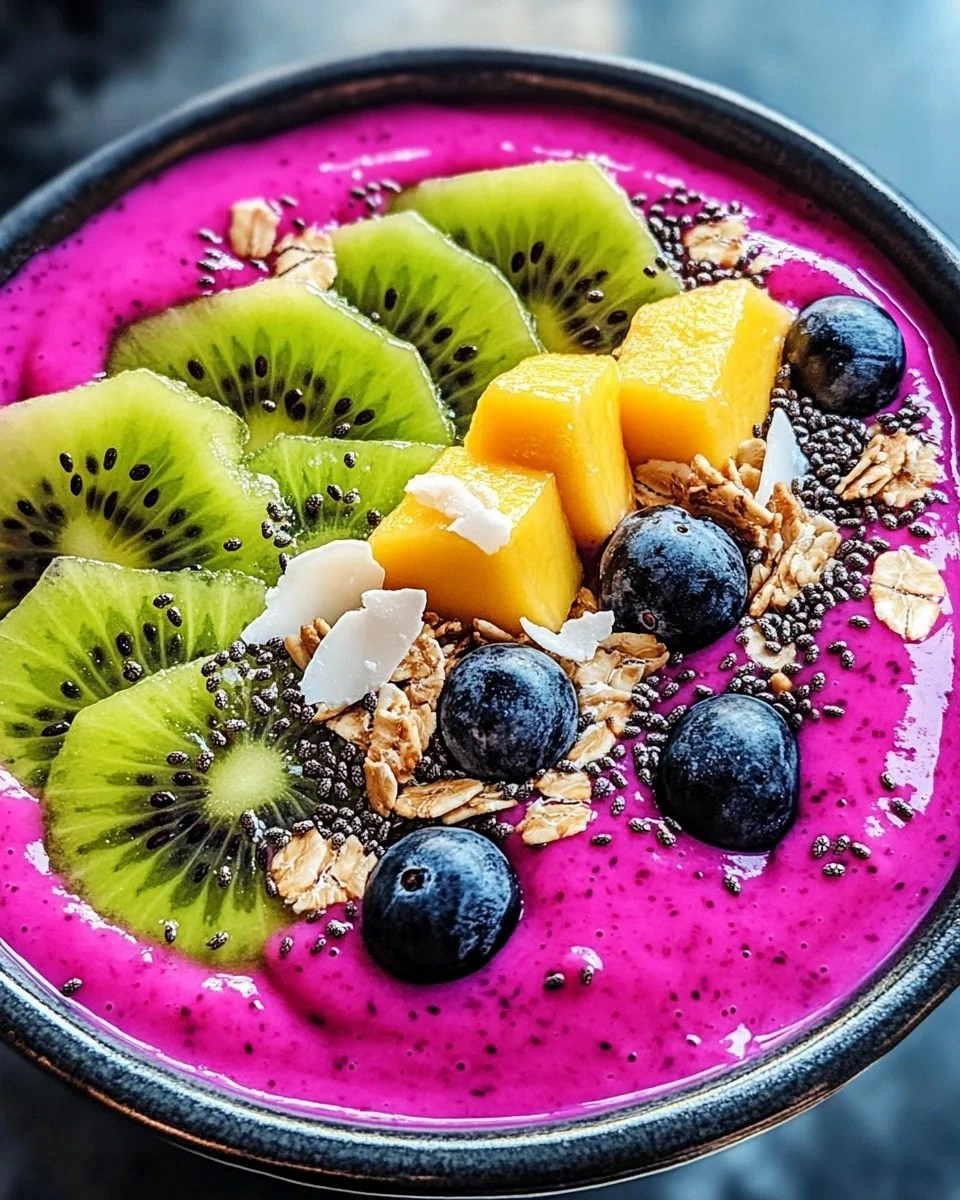
Now comes the fun part: arranging the toppings. Start with a generous handful of granola, spreading it in a circular pattern that mimics a sunrise. Next, scatter the mango cubes and kiwi slices in clusters—think of them as little islands of sunshine. Finally, dust the shredded coconut over the top, letting it cascade like a snow‑kissed peak.
Give the bowl a final drizzle of honey for extra shine. This glossy finish not only adds a sweet note but also makes the bowl look restaurant‑ready. A quick squeeze of fresh lime juice (just a few drops) adds a bright pop that cuts through the richness.
Step back and admire your creation. The bowl should look like a piece of edible art—vivid pink swirls, bright yellow mango, emerald kiwi, and the rustic crunch of granola. This is the moment of truth: take a spoon, dive in, and notice how the creamy base supports the crunchy toppings without sinking. This next part? Pure magic.
That's it — you did it. But hold on, I've got a few more tricks that'll take this to another level...
Insider Tricks for Flawless Results
The Temperature Rule Nobody Follows
Never blend your fruit straight from the freezer at sub‑zero temperatures; let it sit for two minutes so it’s still icy but not rock‑hard. This tiny warm‑up window prevents the blender motor from straining and yields a smoother texture. I once tried blending frozen fruit straight out of the freezer, and the blender coughed like a smoker on a cold morning—don’t let that happen to you.
Why Your Nose Knows Best
The moment you open the blender lid, trust the scent. If you detect a faint coconut aroma mixed with a hint of citrus, you’re on track. If it smells overly sweet or bland, you’ve probably over‑sweetened or under‑blended. I’ve learned to pause, inhale, and adjust honey or lime before the final pour.
The 5‑Minute Rest That Changes Everything
After assembling the bowl, let it rest for exactly five minutes before serving. This short pause allows the chia seeds to fully hydrate and the granola to soften just enough to stay crunchy yet not soggy. It’s a micro‑pause that makes a macro difference in texture.
Layering Like a Pro
When adding toppings, think in layers rather than dumping everything at once. Start with the granola base, then the fruit, then the coconut, and finish with a drizzle of honey. This method ensures each bite delivers a balanced mix of creamy, crunchy, and juicy.
Seasonal Swaps for Year‑Round Fun
If dragon fruit is out of season, substitute with frozen pitaya‑colored acai puree; the flavor profile shifts but the visual impact remains. The key is to maintain that vivid pink‑white contrast, so choose a substitute that offers a similar hue.
Creative Twists and Variations
This recipe is a playground. Here are some of my favorite ways to switch things up:
Tropical Sunrise
Swap the mango and kiwi for fresh pineapple chunks and shredded papaya. Add a drizzle of passion‑fruit pulp for an extra zing. This version leans heavily into tropical flavors and is perfect for a beach‑themed brunch.
Berry Burst
Replace the dragon fruit with a blend of frozen strawberries and raspberries. Use almond butter instead of coconut milk for a nutty undertone. Top with fresh blueberries and a sprinkle of hemp seeds for added protein.
Green Goddess
Blend in a handful of spinach or kale along with the dragon fruit for a vibrant green‑pink swirl. Use oat milk and a dash of vanilla extract. Garnish with sliced avocado and pumpkin seeds for a savory twist.
Protein Power
Add a scoop of vanilla whey or plant‑based protein powder to the base. Swap the granola for toasted quinoa flakes and sprinkle with chia‑seed‑crusted almonds. This version fuels post‑workout recovery while still tasting indulgent.
Decadent Dessert
Incorporate a tablespoon of dark chocolate chips into the blend and drizzle melted chocolate on top. Use coconut cream instead of milk for extra richness. Top with toasted coconut and a dusting of powdered sugar for a dessert‑style bowl.
Storing and Bringing It Back to Life
Fridge Storage
The smoothie base can be stored in an airtight container for up to 24 hours. Keep the toppings separate in a small zip‑top bag to maintain crunch. When ready to serve, simply pour the base into a bowl and add fresh toppings.
Freezer Friendly
If you need to make a larger batch, freeze the blended base in silicone muffin trays for individual portions. They’ll keep for up to 2 weeks. Thaw in the fridge overnight, then stir in a splash of coconut milk before topping.
Best Reheating Method
When reheating, add a tiny splash (about a tablespoon) of water or extra coconut milk and microwave for 30‑seconds increments, stirring in between. This steams the bowl back to a silky texture without turning it watery.